
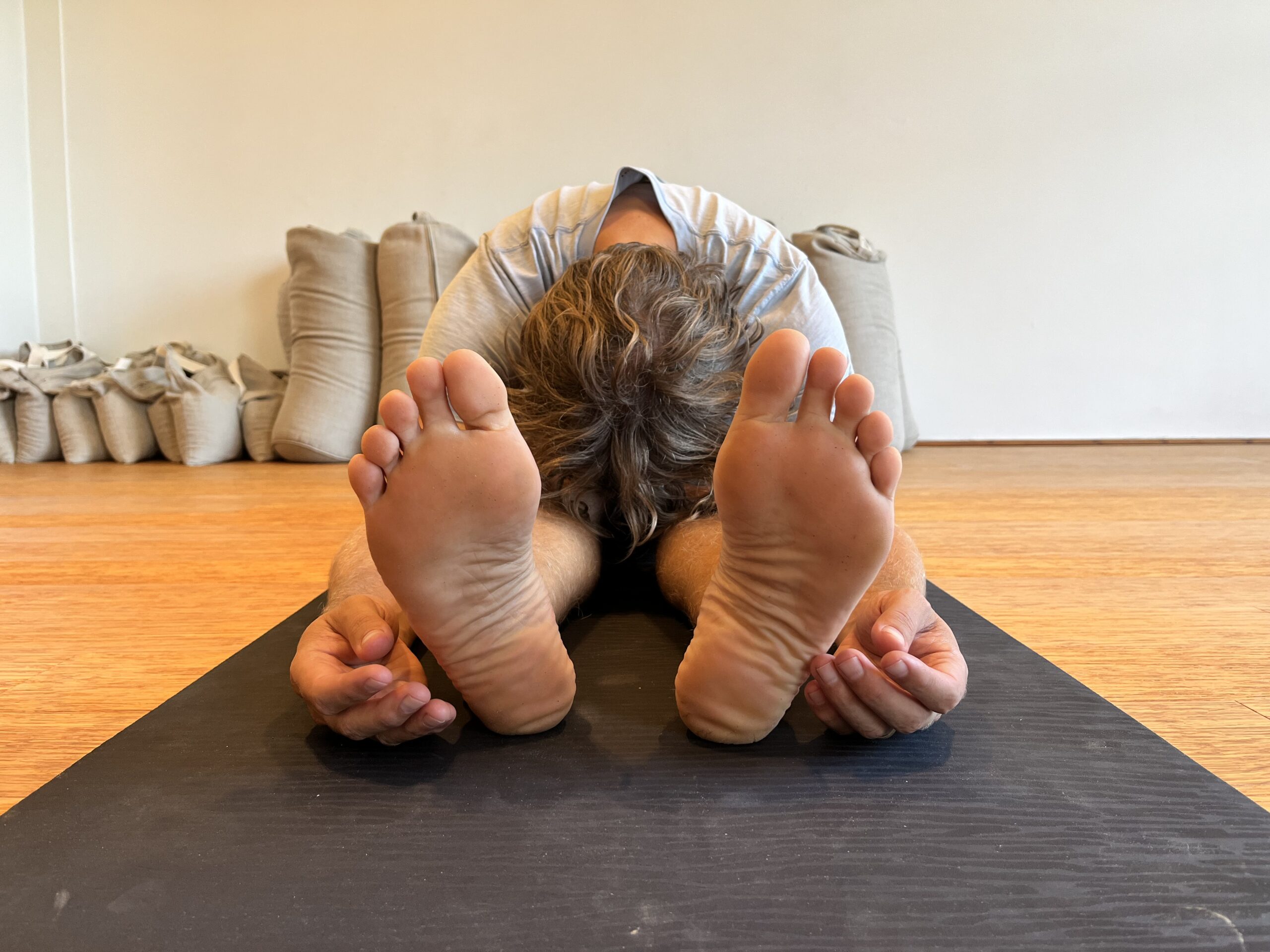
A simple breath meditation goes something like this:
Please begin by bringing your attention to the movement of your breath. Allow your mind to settle and to become more and more absorbed in the rhythm of your breathing. Become aware of any hidden tension in your body or your breath. Gradually notice that your breath is a perfect reflection of your mind. As your mind becomes increasingly quiet, your breath becomes more balanced and more subtle. Eventually your mind will become so quiet that you will have less and less desire to breathe. Continue to effortlessly watch your breath. Eventually this effortless focus on your breath leads you towards experiencing the gap. This is the moment between one thought and the next. Sense your breath rising out of and returning back to a silent and infinite presence. Be aware that in this moment you are whole and complete.
This simple breath meditation is Yoga and there may be no more widely practised form of Yoga than meditation on the breath.
Yoga and meditation allow you to tap into what the ancient wisdoms describe as your true nature, a source of limitless joy, power and freedom.
Along with all of its physical benefits, Yoga’s gift of emotional and spiritual healing optimises the health of your mind both on and off your Yoga mat. Yoga has many benefits for mental health, including:
- The ability to lower anxiety and depression through movement, breathing and awareness of bodily sensations.
- Create a sense of wellbeing, providing an optimistic outlook, improving self-confidence and efficiency, and increasing attentiveness.
- Yoga poses and breathing exercises on a daily basis can help reduce stress and negative thoughts.
- It has been shown that depression symptoms can be greatly improved and that Yoga could be beneficial for suffers of PTSD.
With meditation and mindfulness of breath, you switch from sympathetic to parasympathetic nervous activity. The ability to notice changes in your autonomic nervous system such as your breathing and heartbeat allows you to govern your response. Changes to these involuntary body functions are triggered when you have a stressful event that leads to a heightened state of emotion such as fear or anger. This produces proteins called cytokines that cause inflammation at the cellular level. However, researchers have found that people who practise Yoga and meditation experience a reduction in the production of cytokines. There is also a reduction in the risk of inflammation-based diseases and conditions.
Due to it’s accessible nature, everyone is able to reap the benefits of Yoga in the physical realm. Beyond that, as you become more aware of the subtle movement of the breath, you begin to move into the dimension of mindfulness. Mindfulness offers clarity of mind through a witnessing of phenomena. For example, although the breath cannot be seen, you know you are breathing through your direct sensory experience of it. Taking this concept to a deeper layer, although thoughts cannot be seen, you know you are thinking through gentle mindful attention to the flow of thoughts as they come and go.
The discipline of Yoga offers a timeless and holistic model of health and healing. Although it may not result in the complete elimination of physical or mental diseases and/or adverse conditions in the body or mind, it certainly offers a holistic pathway of healing and transformation.